From drinking water and wastewater treatment to industrial processing and energy, storage tanks are essential infrastructure across many sectors.
Choosing a tank involves more than its capacity. Engineers must consider the stored liquid, construction material, installation location, shape, environmental conditions and applicable design standards. This blog focuses on medium- to large-sized storage tanks, rather than smaller domestic or portable systems.
At a glance: Storage tanks can be classified by material (steel, concrete or GRP), location (ground-supported, elevated or underground), shape (circular, rectangular or square) and application.
What are storage tanks made from?
The most suitable material depends on the stored liquid, required capacity, corrosion exposure, structural performance, service life and maintenance needs.
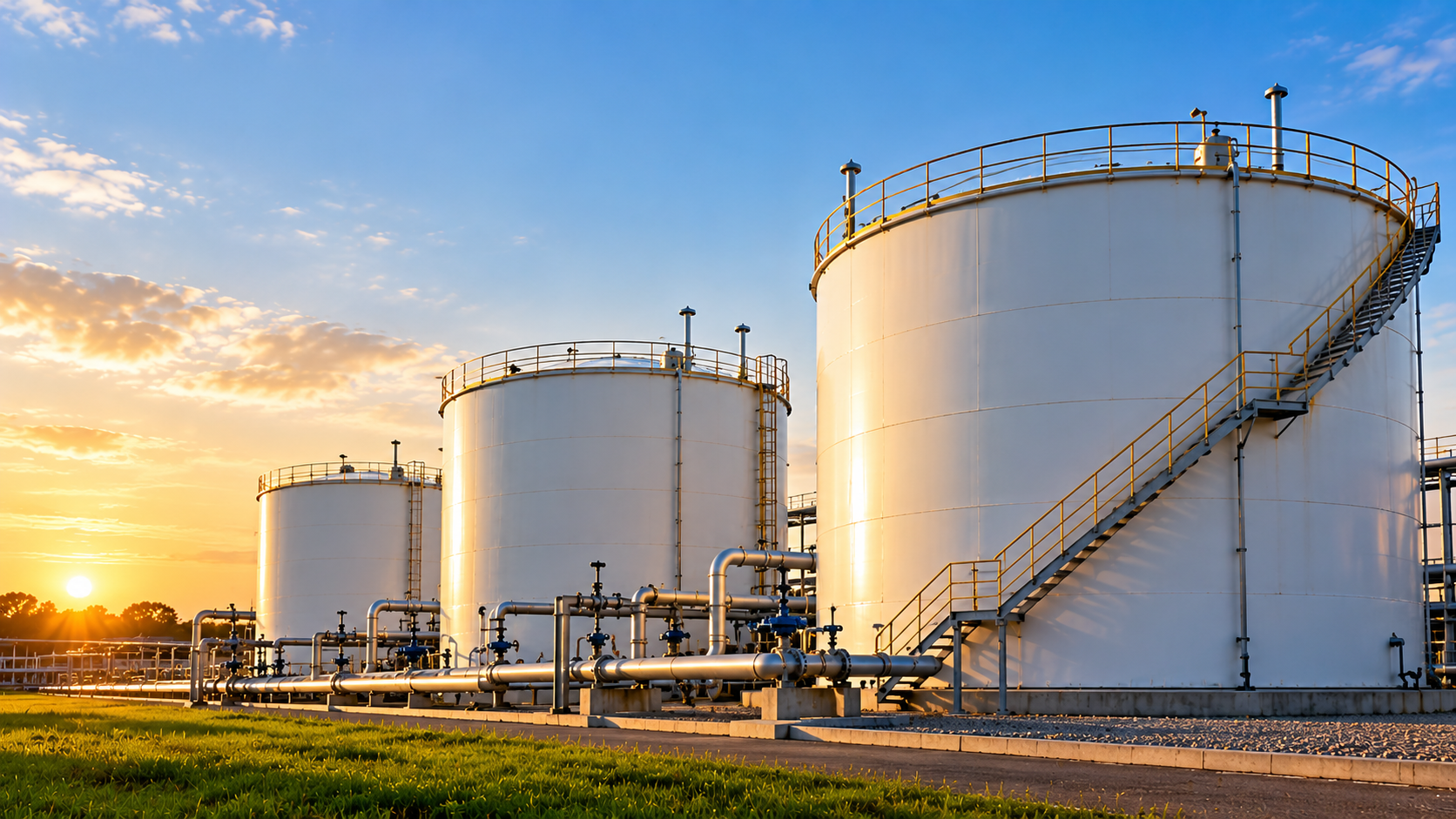
Steel storage tanks
Steel is widely used for medium- and large-capacity tanks because of its strength, versatility and suitability for different fabrication and assembly methods. Common steel tank systems include:
Galvanised steel
A zinc coating provides corrosion protection for selected water storage and industrial applications, subject to compatibility and operating conditions.
Epoxy-coated steel
A protective coating system helps resist deterioration in water, wastewater and certain industrial environments.
Glass-fused-to-steel
Combines a steel structure with a fused glass coating. Used for suitable water, wastewater and anaerobic digestion applications.
Stainless steel
Selected where corrosion resistance, hygiene or process requirements are important; grade selection depends on service conditions.
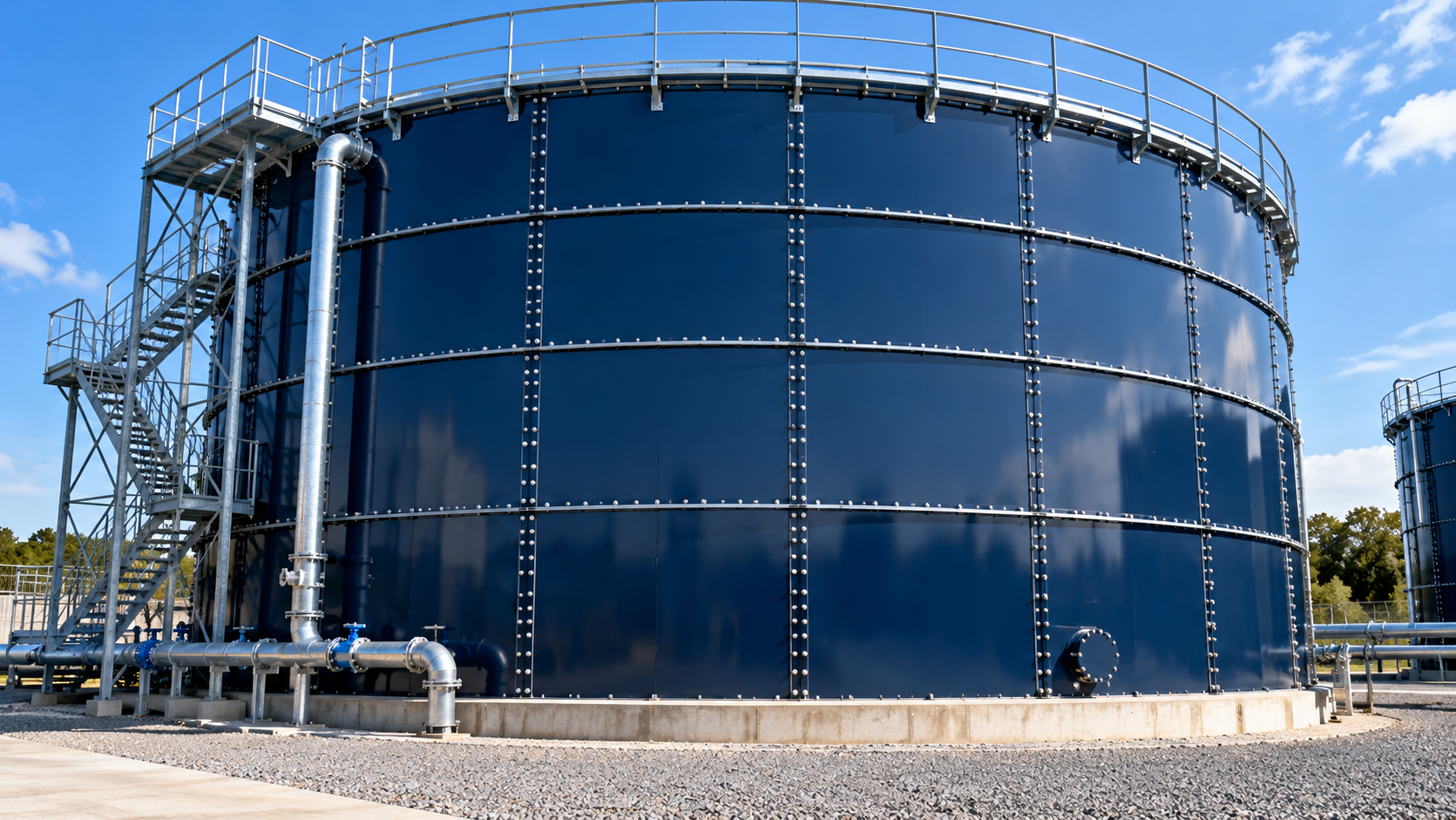
Bolted or welded? Bolted tanks use prefabricated panels connected with bolts and sealing systems, which can support transport and site assembly. Welded tanks use joined steel plates and are common in industrial liquid storage. Selection depends on the tank system, site, capacity and relevant standards.
Concrete tanks
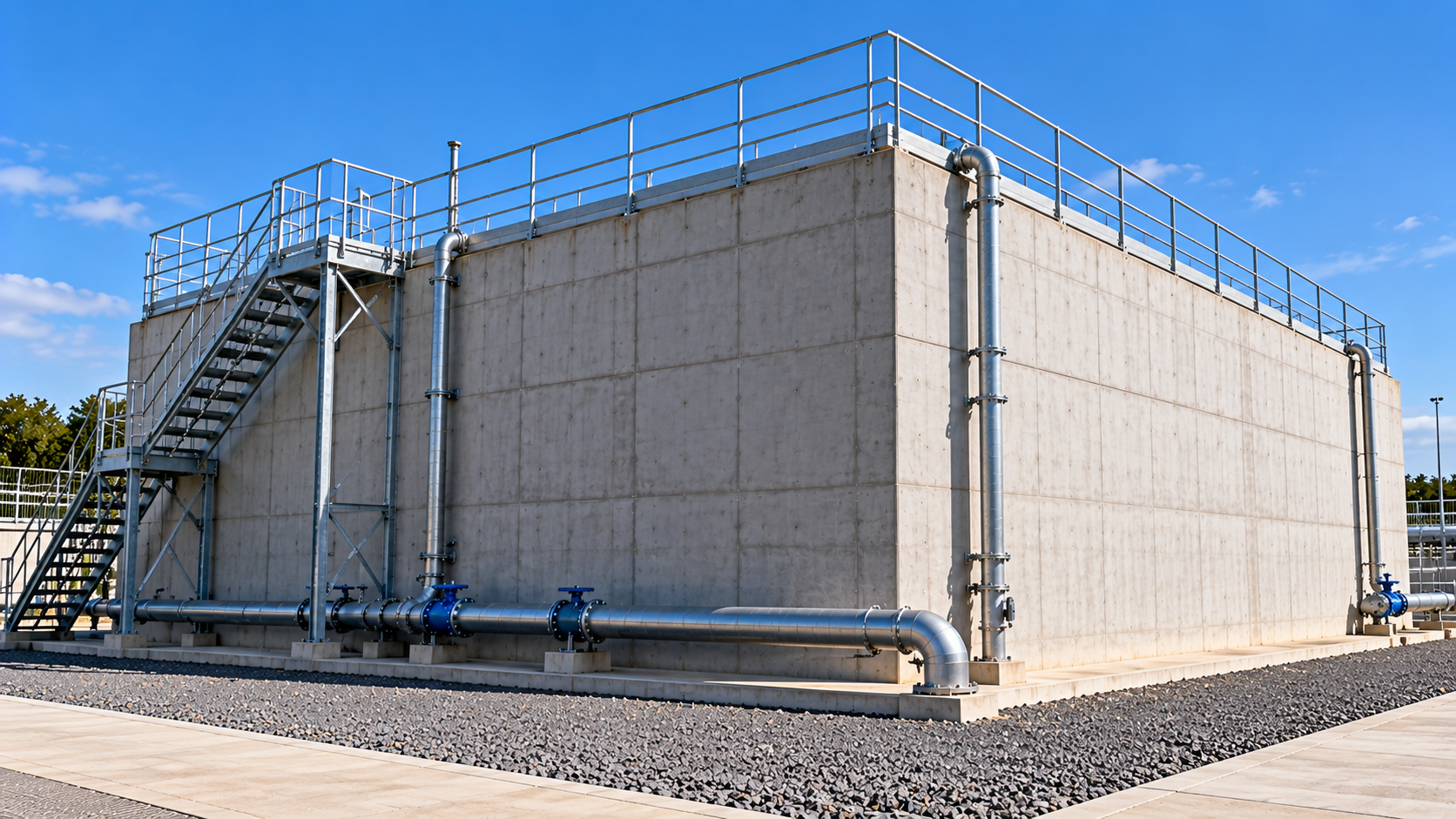
Built using cast-in-situ or precast concrete. Common in water and wastewater infrastructure; design considers reinforcement, cracking, durability and liquid containment.
GRP tanks
Glass Reinforced Plastic (fibreglass-reinforced plastic) offers corrosion resistance and relatively low self-weight. Suitability depends on contents, temperature, dimensions and structural requirements.
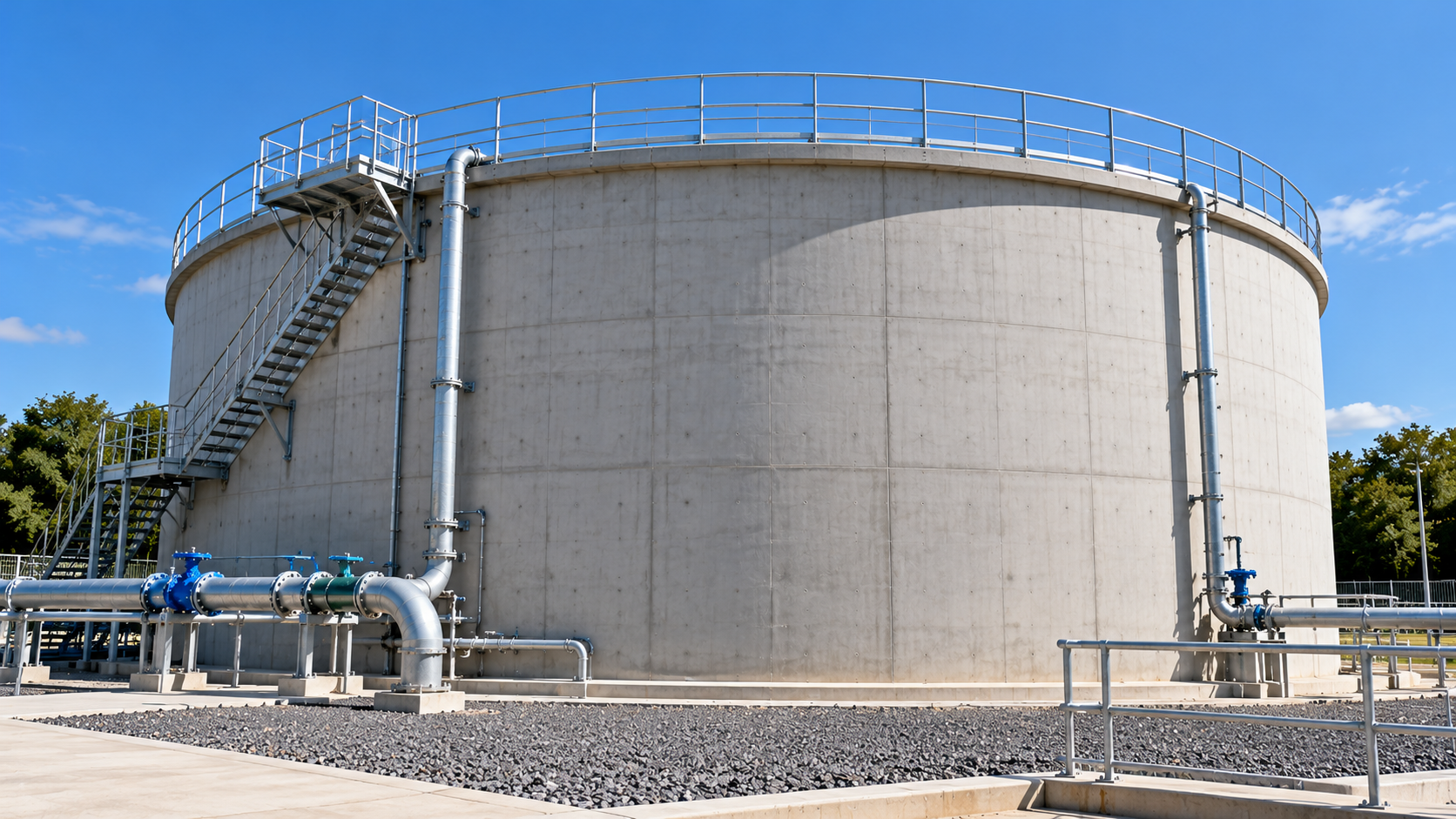
Where can storage tanks be located?
Installation affects the loads on the tank, the supporting structure and its foundations.
Ground-supported
Built on suitable foundations at or near ground level. Tank–foundation–soil interaction and environmental loads are key considerations.
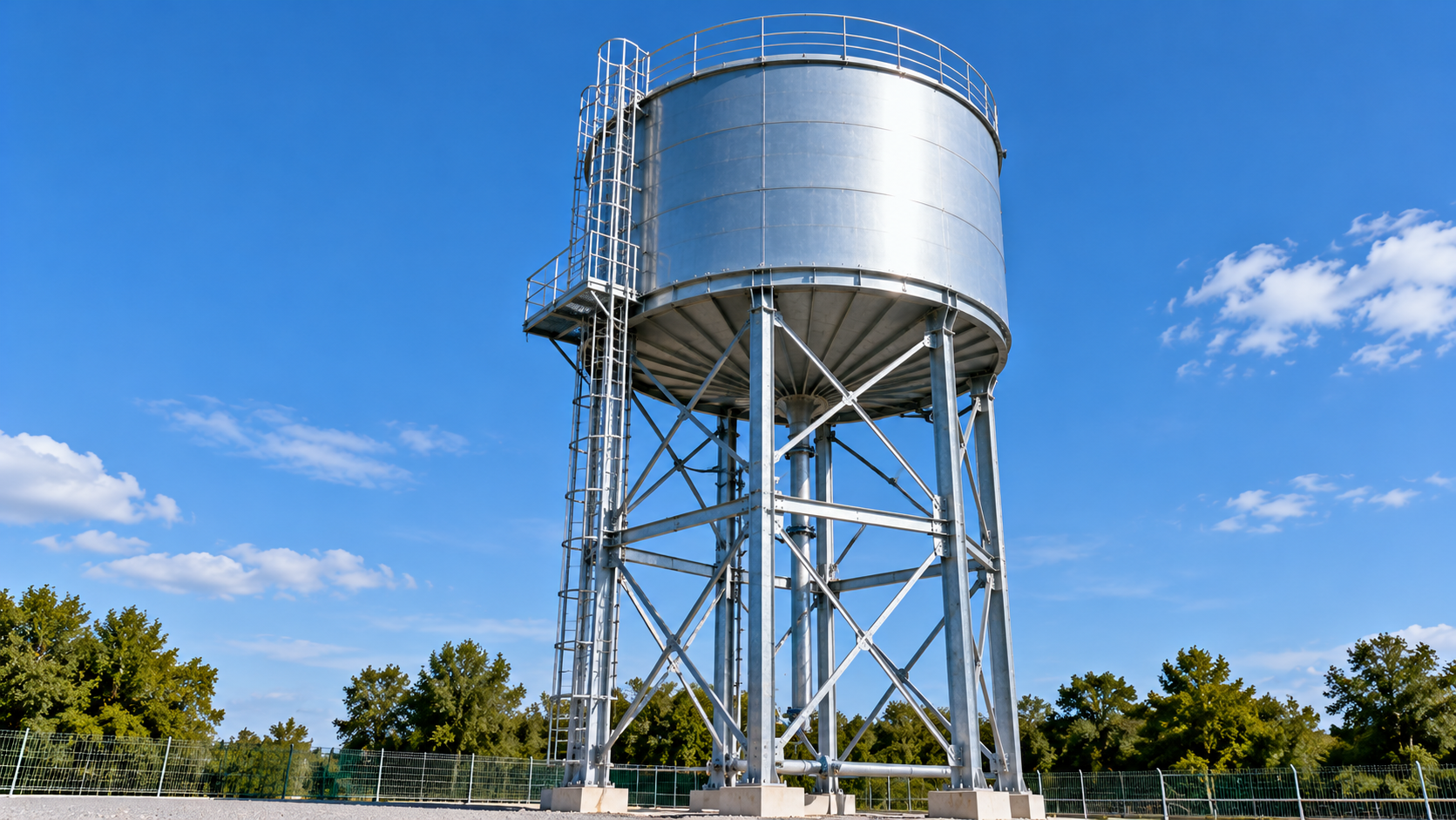
Elevated
Supported by a tower or structural framework, often to provide hydraulic pressure in water distribution systems.
Underground
Partially or fully buried. Design must consider soil pressure, groundwater, buoyancy, access and site conditions.
Does the shape of a tank matter?
Circular tanks
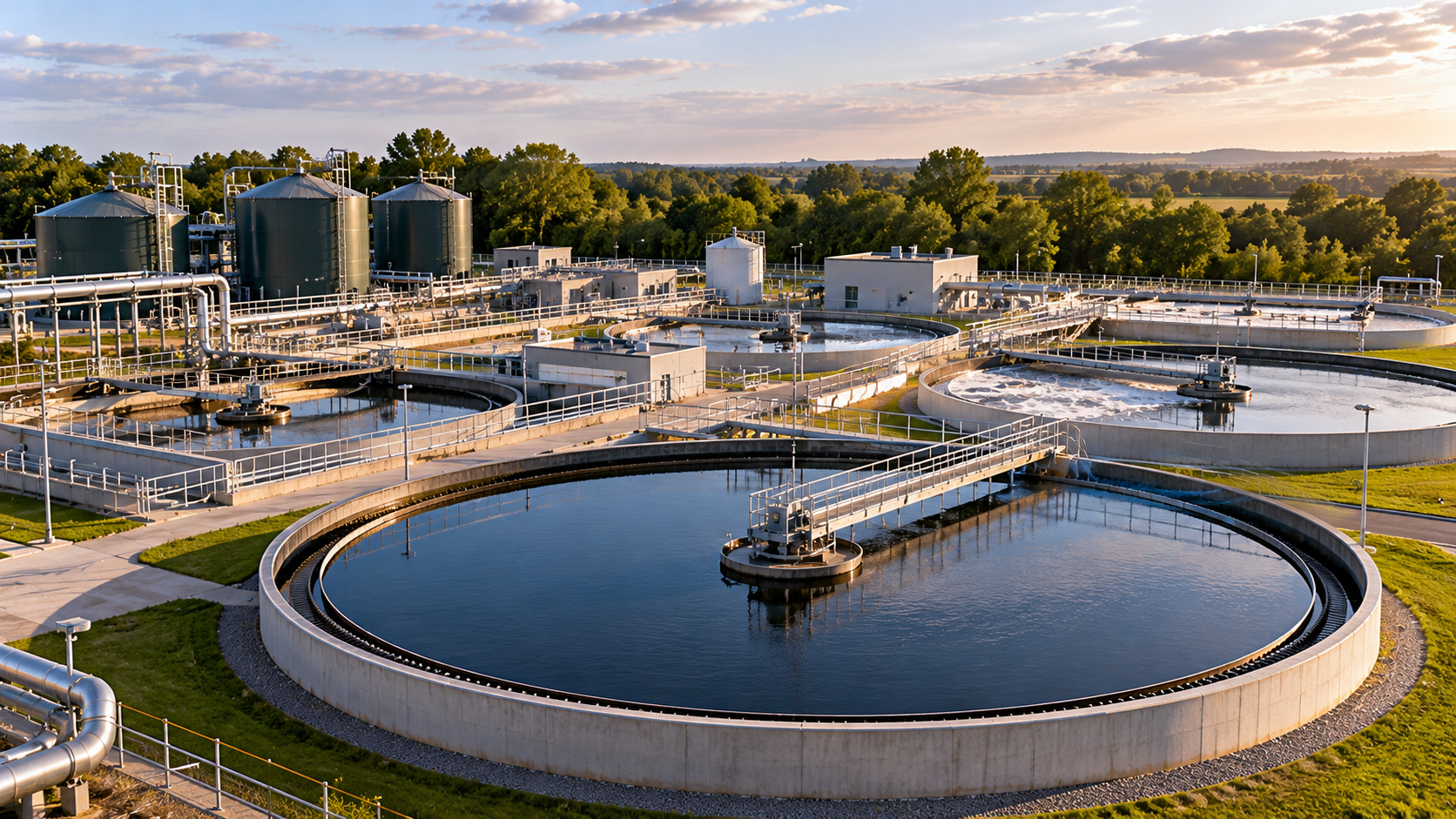
Widely used for medium- and large-capacity liquid storage. Their geometry can resist liquid pressure efficiently through circumferential forces in the walls.
Rectangular and square tanks
Useful where site space or process arrangements dictate the layout. Flat walls need particular attention to bending, reinforcement and support.
The right configuration balances structural efficiency with practical site and operational requirements.
Where are storage tanks used?
Different industries place different demands on tank materials, coatings, containment and structural design.
Water storage
Potable water, industrial water and firewater systems.
Wastewater treatment
Wastewater, sludge and treatment processes, with attention to chemical exposure.
Industrial liquids
Storage for manufacturing and processing, matched to liquid properties and operating conditions.
Flammable liquids
Petrol, diesel, ethanol and other suitable products, with applicable safety and design requirements.
Anaerobic digestion
Feedstock, digesters, process liquids and associated treatment stages.
Aquaculture
Water storage and treatment for fish farming and related operations.
International design standards for storage tanks
Standards differ by construction method, material, tank geometry, stored liquid and market. Not every standard applies to every tank. The relevant editions and project-specific requirements must be established during design.
| Standard | General focus |
|---|---|
| API 650 | Certain welded steel tanks, particularly vertical cylindrical aboveground tanks for oil and other suitable liquids. |
| EN 14015 | Site-built, vertical cylindrical, flat-bottomed aboveground welded steel liquid storage tanks within its scope. |
| AWWA D100 | Welded carbon steel tanks for water storage. |
| AWWA D103 | Factory-coated bolted carbon steel tanks for water storage. |
| ISO 28765 | Vitreous-enamel-coated bolted cylindrical steel tanks for specified water, effluent and sludge applications. |
| Eurocodes | Relevant structural actions, material design, liquid-containing structures and foundations, together with national provisions. |
Engineering note: AWWA D100 and D103 cover different construction systems and should not be treated as interchangeable. these are not the only one
What should be considered when selecting a tank?
There is no single material, shape or construction method that suits every application. Key considerations include:
- Stored liquid and its properties
- Capacity and dimensions
- Material and protective coating
- Ground, elevated or underground location
- Shape and structural behaviour
- Foundations and environmental loads
- Fabrication, installation and maintenance
- Design standards and regulations
Structural engineering brings these factors together to support a safe, practical solution appropriate to its intended purpose.
Conclusion
Storage tanks support water infrastructure, wastewater treatment, industrial processing, energy and many other sectors. Their material, installation method, shape and operating requirements all influence structural design.
Understanding these differences-and selecting the appropriate design standards-is an essential starting point for effective storage tank engineering.
In upcoming blogs, we will explore the structural design of bolted steel liquid storage tanks in more detail, including the engineering considerations that influence their design and performance.